2026.07.14 화요일
검색
'ArtificialIntelligence' 검색결과
기간검색
-
~
검색영역
검색어
-
![[경제일보] 넥슨 AI 시대 게임 경쟁력은 구현 아닌 맥락](https://image.ajunews.com//content/image/2026/06/16/20260616105643375455.jpg) 넥슨 "AI 시대 게임 경쟁력은 구현 아닌 맥락" "AI라는 거대한 흐름은 게임 산업에도 많은 질문을 던지고 있다" [경제일보] 이정헌 넥슨 일본법인 대표는 지난 16일 경기 성남시 경기창조경제혁신센터에서 열린 ‘넥슨 개발자 콘퍼런스(NDC) 2026’ 환영사에서 이같이 말했다. 올해 NDC는 인공지능(AI)을 핵심 화두로 삼고 게임 개발과 라이브 서비스, 이용자 커뮤니티 운영 전반의 변화를 조망하는 자리로 마련됐다. NDC는 2007년 넥슨 사내 소규모 기술 발표회로 출발해 2011년 외부 공개 행사로 확대됐다. 이후 게임 개발 노하우와 기술 혁신을 공유하는 국내 대표 개발자 콘퍼런스로 자리 잡았다. 이날 기조강연은 강대현 넥슨코리아 공동대표가 맡았다. 강 대표는 ‘구현이 쉬워지는 시대, 우리는 무엇으로 경쟁하는가’를 주제로 AI 확산 이후 게임 산업의 경쟁 조건이 달라지고 있다고 진단했다. 그는 생성형 AI가 코드 작성, 이미지 제작, 프로토타입 개발까지 지원하면서 게임 제작의 진입장벽이 빠르게 낮아졌다고 봤다. 그러나 제작이 쉬워진 만큼 경쟁은 더 치열해진다는 것이 그의 판단이다. 강 대표는 “AI는 우리만 쉽게 만드는 것이 아니라 모두를 쉽게 만든다”며 “구현이 쉬워질수록 경쟁의 무게 중심은 다른 곳으로 이동할 수밖에 없다”고 말했다. 그가 제시한 답은 ‘맥락’이다. 강 대표는 “구현이 쉬워지는 시대에 무게 중심은 맥락으로 이동한다”며 “게임은 구현의 수준이 아니라 맥락의 깊이로 결정해야 한다”고 강조했다. AI 모델은 누구나 쓸 수 있지만 이용자와 함께 쌓아온 시간, 신뢰, 관계, 문화는 단기간에 복제할 수 없다는 의미다. 강 대표는 게임 이용자가 단순히 콘텐츠를 소비하는 존재가 아니라고 설명했다. 그는 “게임 이용자들은 콘텐츠를 소비하는 것이 아니라 게임 안에서 살아간다”며 “개발사는 무대를 만들 뿐이고 그 안의 문화와 이야기는 이용자들이 만들어간다”고 말했다. 대표 사례로는 메이플스토리 이용자 커뮤니티에서 오랫동안 회자된 ‘헤네시스 대참사’와 게임을 통해 인연을 맺고 결혼한 이용자 사례를 들었다. 게임이 하나의 서비스 상품을 넘어 이용자 삶과 관계가 축적되는 세계로 확장될 때 장기 경쟁력이 만들어진다는 설명이다. 강 대표는 이를 ‘축적된 지능’으로 표현했다. 그는 “아티피셜 인텔리전스(Artificial Intelligence)는 사서 쓸 수 있지만, 어큐뮬레이티드 인텔리전스(Accumulated Intelligence)는 오직 시간을 통해서만 축적할 수 있다”고 말했다. 생성형 AI를 활용하는 능력과 함께 이용자 경험, 운영 노하우, 커뮤니티 신뢰를 얼마나 쌓아왔는지가 AI 시대 게임사의 차별화 자산이 된다는 뜻이다. 넥슨은 올해 NDC에서 AI 관련 강연 비중을 크게 늘렸다. 넥슨컴퍼니를 비롯해 크래프톤, 로블록스, NC AI, 구글 딥마인드, 스노우플레이크 등 국내외 게임사와 IT 기업 관계자들이 연사로 참여한다. 생성형 AI와 머신러닝을 활용한 콘텐츠 제작, 개발 생산성 향상, 데이터 분석, 라이브 서비스 운영 사례가 다수 공유될 예정이다. [아주경제 2026년 06월 18일자 13면에 게재된 기사입니다.]
넥슨 "AI 시대 게임 경쟁력은 구현 아닌 맥락" "AI라는 거대한 흐름은 게임 산업에도 많은 질문을 던지고 있다" [경제일보] 이정헌 넥슨 일본법인 대표는 지난 16일 경기 성남시 경기창조경제혁신센터에서 열린 ‘넥슨 개발자 콘퍼런스(NDC) 2026’ 환영사에서 이같이 말했다. 올해 NDC는 인공지능(AI)을 핵심 화두로 삼고 게임 개발과 라이브 서비스, 이용자 커뮤니티 운영 전반의 변화를 조망하는 자리로 마련됐다. NDC는 2007년 넥슨 사내 소규모 기술 발표회로 출발해 2011년 외부 공개 행사로 확대됐다. 이후 게임 개발 노하우와 기술 혁신을 공유하는 국내 대표 개발자 콘퍼런스로 자리 잡았다. 이날 기조강연은 강대현 넥슨코리아 공동대표가 맡았다. 강 대표는 ‘구현이 쉬워지는 시대, 우리는 무엇으로 경쟁하는가’를 주제로 AI 확산 이후 게임 산업의 경쟁 조건이 달라지고 있다고 진단했다. 그는 생성형 AI가 코드 작성, 이미지 제작, 프로토타입 개발까지 지원하면서 게임 제작의 진입장벽이 빠르게 낮아졌다고 봤다. 그러나 제작이 쉬워진 만큼 경쟁은 더 치열해진다는 것이 그의 판단이다. 강 대표는 “AI는 우리만 쉽게 만드는 것이 아니라 모두를 쉽게 만든다”며 “구현이 쉬워질수록 경쟁의 무게 중심은 다른 곳으로 이동할 수밖에 없다”고 말했다. 그가 제시한 답은 ‘맥락’이다. 강 대표는 “구현이 쉬워지는 시대에 무게 중심은 맥락으로 이동한다”며 “게임은 구현의 수준이 아니라 맥락의 깊이로 결정해야 한다”고 강조했다. AI 모델은 누구나 쓸 수 있지만 이용자와 함께 쌓아온 시간, 신뢰, 관계, 문화는 단기간에 복제할 수 없다는 의미다. 강 대표는 게임 이용자가 단순히 콘텐츠를 소비하는 존재가 아니라고 설명했다. 그는 “게임 이용자들은 콘텐츠를 소비하는 것이 아니라 게임 안에서 살아간다”며 “개발사는 무대를 만들 뿐이고 그 안의 문화와 이야기는 이용자들이 만들어간다”고 말했다. 대표 사례로는 메이플스토리 이용자 커뮤니티에서 오랫동안 회자된 ‘헤네시스 대참사’와 게임을 통해 인연을 맺고 결혼한 이용자 사례를 들었다. 게임이 하나의 서비스 상품을 넘어 이용자 삶과 관계가 축적되는 세계로 확장될 때 장기 경쟁력이 만들어진다는 설명이다. 강 대표는 이를 ‘축적된 지능’으로 표현했다. 그는 “아티피셜 인텔리전스(Artificial Intelligence)는 사서 쓸 수 있지만, 어큐뮬레이티드 인텔리전스(Accumulated Intelligence)는 오직 시간을 통해서만 축적할 수 있다”고 말했다. 생성형 AI를 활용하는 능력과 함께 이용자 경험, 운영 노하우, 커뮤니티 신뢰를 얼마나 쌓아왔는지가 AI 시대 게임사의 차별화 자산이 된다는 뜻이다. 넥슨은 올해 NDC에서 AI 관련 강연 비중을 크게 늘렸다. 넥슨컴퍼니를 비롯해 크래프톤, 로블록스, NC AI, 구글 딥마인드, 스노우플레이크 등 국내외 게임사와 IT 기업 관계자들이 연사로 참여한다. 생성형 AI와 머신러닝을 활용한 콘텐츠 제작, 개발 생산성 향상, 데이터 분석, 라이브 서비스 운영 사례가 다수 공유될 예정이다. [아주경제 2026년 06월 18일자 13면에 게재된 기사입니다.]2026-06-18 08:40:46
-
 Lessons in Leadership from the Classics | Chapter 4: Nvidia The Patience and the Ascent of Jensen Huang How the Alleyways of Korea and the Floors of Semiconductor Factories Forged the Aesthetics of 古枯孤高 [Economy Daily] At the beating heart of the civilizational upheaval we call artificial intelligence stands one company and one man: Nvidia and Jensen Huang. The world measures them in market capitalization and market share. But the deeper truth of great leadership outlasts any number. It is the power of time, long and unhurried. It is the discipline of subtraction. It is the courage of solitude. And it is, finally, the dignity that comes only from having endured. In the vocabulary of East Asian philosophy, these four qualities compress into a single phrase: 古枯孤高 — ancient (古), austere (枯), solitary (孤), elevated (高). Nvidia's rise is not the story of a stock that spiked overnight. It is the story of these four characters slowly calcifying into the bones of one man and the culture of one company, across thirty years of painstaking accumulation. 古 — The Ancient: Time as the First Discipline Every great enterprise, if it is truly great, eventually earns its face — but only through time. Jensen Huang had been walking this earth as a businessman long before the world knew his name. His relationship with Korea begins here, and it begins on foot. According to domestic industry accounts from that era, Huang made repeated visits to Yongsan Electronics Market in Seoul in the late 1990s and early 2000s — when Nvidia was still an obscure startup struggling to be taken seriously. He came not as a visiting dignitary but as a salesman: explaining graphics cards to shop owners, persuading assemblers, winning trust one transaction at a time. Huang himself has said his connection to Korea dates to 1996. He has spoken of how South Korea's explosion of high-speed internet, its PC-bang culture, and the nationwide fever for StarCraft formed a critical foundation for Nvidia's early growth. Korea, in those years, was the world's most electrified laboratory for digital culture — and the heat of its gaming rooms, the sharpness of its consumers, the velocity with which it embraced new technology, all of it nourished a company that had not yet found its footing. This detail matters enormously. The histories of great corporations are often rewritten to begin in gleaming boardrooms or on famous stages. But Jensen Huang's formation happened in narrow storefronts, surrounded by towers of component boxes, in a market where customers were price-sensitive and performance-obsessed and utterly unimpressed by brand mythology. In Yongsan, he did not sell a brand. He sold credibility. He sold product knowledge. He sold the felt experience of superior performance. The I Ching offers an image for this season of a man's life: 潛龍勿用 — "the hidden dragon does not yet act." The dragon submerged beneath the water has not yet ascended to the sky, but it is already gathering strength, already orienting itself toward its direction. Korea was that submerged time for Jensen Huang. It was where the dragon went quiet and grew. 枯 — The Austere: The Discipline of Withholding Austerity is not poverty. It is restraint. And few companies in the history of Silicon Valley have practiced restraint as rigorously or as consequentially as Nvidia. While its competitors raced to win the surface war — chasing specification numbers, upgrading the cosmetics of their products, playing to the gallery of consumer benchmarks — Huang kept his organization's attention trained on something less visible and far more consequential: the underlying architecture of computation, the logic of parallel processing, the infrastructure that would eventually become the indispensable engine of artificial intelligence. This is the aesthetic the Chinese literati call 枯淡 — a beauty that comes not from ornament but from essence. The Diamond Sutra puts it this way: 凡所有相 皆是虛妄 — "all that has form is ultimately illusion." In business terms: what catches the eye rarely determines a company's fate. What determines fate is the capability that cannot be seen. Nvidia understood this early. That is why the Nvidia of today rests not on the appearance of its products but on the depth of its software ecosystem, its developer base, and the intellectual architecture that competitors cannot easily replicate. This philosophy of austerity extends to Huang's understanding of human character. Speaking at Stanford, he told students that the most important trait for success is not intelligence but resilience — and went further, saying, "I hope you will have the experience of suffering and hardship." It is a startling thing to say, and deliberately so. His point is unambiguous: greatness is not the product of cleverness alone. Character is forged not in comfort but in friction. Huang speaks from experience. He has publicly described being bullied in an American boarding school as a boy, washing dishes and cleaning bathrooms at minimum wage. His philosophy of hardship is not rhetoric. It is autobiography. Most organizations today speak to their people endlessly about well-being and are afraid to speak about tempering. But Jensen Huang did not flinch from the uncomfortable truth: growth always requires some degree of resistance and endurance. He knows this in his body. 孤 — The Solitary: The Courage of the Unfashionable Conviction Solitude, properly understood, is not the condition of being alone. It is the willingness to choose a road that others have not taken — and to walk it long enough to find out whether you were right. Nvidia was, for a very long time, a company that received no particular applause. It was known as a graphics chip company, and in that category, it was formidable. But inside that public identity, Huang carried a private and lonely conviction: that the dominant paradigm of computing would shift — that the age of the general-purpose CPU would eventually yield to an age of accelerated computing. Markets demand the present moment. Leaders sometimes have to absorb today's contempt in exchange for tomorrow's vindication. Only those who sustain that solitude earn the right to the rewards of early arrival. The Analects of Confucius puts it plainly: 德不孤 必有隣 — "virtue is never truly alone; it will always find its neighbors." What appears solitary and eccentric at the beginning eventually draws its community. And in the story of Nvidia and Korea, this movement from isolation to alliance is almost perfectly illustrated. The partnership between Huang and South Korea has long since outgrown its origins in retail sales. SK Hynix began collaborating with Nvidia on High Bandwidth Memory in the uncertain early days of that technology — a bet made before the outcome was clear. That relationship has since deepened into something that resembles co-development more than supply chain. Nvidia has been advancing large-scale AI chip supply and infrastructure cooperation with the Korean government, Samsung, the SK Group, Hyundai Motor Group, and Naver. The lonely salesman who once walked the aisles of Yongsan is now at the table with the leaders of Korean industry and government, shaping the architecture of the nation's AI future. The solitary vigil became a strategic alliance. What was once walked alone is now walked together. 高 — The Elevated: Altitude as Accountability Elevation is not merely position. It is character — the capacity to see farther and to hold responsibility longer than others can or will. The Doctrine of the Mean speaks of 至誠無息 — "true sincerity never rests." This is, unexpectedly, one of the most precise descriptions of how Jensen Huang has run his company. He did not build Nvidia on a passing fashion. He crossed product failures, market cynicism, supply chain crises, and geopolitical headwinds, and climbed — slowly, deliberately, one foothold at a time — to the position the company occupies today. This is not a mountain ascended in a season. This is a summit reached in decades. Here, again, Korea re-enters the story. However regal the title "emperor of the AI era" may sound, the circuitry running through that crown is substantially Korean. Korea began as the consumption frontier — the PC-bang, the gaming market, the early adopter culture that gave Nvidia its first mass foothold. It has since become the strategic frontier: the partner in HBM and advanced memory, the co-architect of AI factories and digital transformation. Between the image of Jensen Huang persuading shop owners in Yongsan and the image of Jensen Huang discussing AI infrastructure with the heads of Korea's largest conglomerates, there runs a very long river. But the river is unbroken. What he first saw in Korea was not merely a sales opportunity. He saw a society with an extraordinary capacity for fast technical comprehension, for organizing technology into industry, for connecting the work of the mind to the work of the factory floor. That insight lives inside every partnership he has built here since. A Reckoning for Korean Business What, then, should Korean business leaders take from this? The lesson is not complicated, though it is demanding. Innovation does not arise from eloquent mission statements. It arises from time endured, from the discipline to discard the inessential, from the independence to pursue an unpopular answer, and from the accountability that eventually transforms all of it into something worthy of the word dignity. Jensen Huang's career is not a story of a man who happened to catch the AI wave at the right moment. It is a story of sediment — of years and decades of experience, discipline, and conviction accumulating until they were precisely aligned with the door that history opened. Which asks certain questions of Korean business. Do we still carry the original instinct of those years when we wrestled with the market on the ground floor — when we had no reputation to trade on, only our knowledge and our reliability? Do we have the austere courage to strip away what is not essential? Do we have the nerve to choose the lonely right answer over the popular wrong one? Management, at its best, is completed in the love of people, in the respect for the work done in the field, and in the refusal to defy the logic of time and nature. The tree that grows too fast is hollow at its core. The success that comes too easily has shallow roots. Nvidia — Jensen Huang's Nvidia — took the opposite path. It stood like an ancient tree, silent and unhurried, enduring the winds and the droughts, growing upward alone toward the high place it had decided, long ago, to reach. His success, for that reason, is not a flash of light. It is light that stays. That is the lesson of 古枯孤高. Only those who have endured long enough ascend high enough. Only those who have passed through austerity reach genuine depth. Only those who have borne solitude long enough find themselves, one day, at the center of their age. Jensen Huang's Korean story is one essential thread in that larger narrative. Today's glory is conceived in yesterday's alleyways. Even the history of the world's most powerful technology company is completed, in the end, only on the accumulated sweat and trust of human beings. He is demonstrating that, quietly, every day. The author is a contributing columnist covering business philosophy, technology, and economic history.
2026-04-22 11:57:23
-
 박윤영 KT 신임 대표, 자회사 수장 전격 교체...강력한 AX 중심 체제 구축 돌입 [경제일보] KT(대표 박윤영)가 신임 대표이사 체제를 공식 출범과 함께 대대적인 임원 감축과 핵심 계열사 수장 교체를 골자로 하는 고강도 조직 쇄신에 나섰다. 이번 인사는 기존 방대한 임원 규모를 30%가량 줄이는 조직 슬림화와 미래 핵심 먹거리인 인공지능 전환에 초점이 맞춰졌다. 다만 본사 중심의 친정 체제 구축을 서두르는 과정에서 주주총회 의결 직후 자회사 대표 인사를 번복하는 초유의 사태가 발생하면서 절차적 정당성을 둘러싼 내부 반발이 일고 있다. 박윤영 대표가 지난해 12월 차기 수장 후보로 내정된 이후 약 3개월간 주요 인사가 지연됐다. 각 계열사는 경영 공백을 막기 위해 대표 연임이나 승진 안건을 선제적으로 주주총회에서 의결해 둔 상태였다. 신임 경영진이 공식 취임 직후 이례적인 속도전을 펼치면서 인사 번복 논란이 수면 위로 떠올랐다. 가장 큰 파열음은 위성방송 자회사 KT스카이라이프에서 발생했다. 지난달 26일 정기 주주총회와 이사회를 거쳐 조일 경영기획총괄 부사장을 신임 대표로 선임했으나 불과 4일 만에 본사로부터 사퇴 통보가 내려졌다. 이어 본사는 지난달 31일 임원 인사를 통해 지정용 KTcs 대표를 신임 후보로 내정하며 기존 상장사 주주총회 결과를 사실상 무력화했다. 이에 대해 KT스카이라이프 노동조합은 본사의 일방적인 수장 교체 통보가 상장회사의 자율 경영 질서를 훼손한 부당 개입이라며 강경 대응을 예고했다. 노조 측은 조일 전 대표가 자회사 HCN과 함께 인공지능 스포츠 중계 플랫폼 ‘호각’에 약 100억원을 투자해 손실을 낸 책임자라는 점을 들어 선임에 반대해 왔다. 그러나 사측이 이를 강행한 뒤 다시 사퇴로 입장을 바꾸자 강하게 반발하고 있다. 반면 HCN 노조는 신임 내정자의 미디어 전문성을 인정하며 신중히 지켜보겠다는 입장을 밝혔다. 이와 유사한 인사 번복은 다른 계열사에서도 이어졌다. HCN은 원흥재 대표가 최근 이사회에서 임기를 1년 연장했지만 같은 날 최광철 KT IPTV본부장이 신임 수장으로 내정되면서 교체 수순을 밟게 됐다. KTcs 역시 주주총회에서 지정용 대표의 연임을 확정했으나 지 대표의 이동으로 이창호 전 충남충북광역본부장이 후임으로 거론되고 있다. 밀리의서재는 박현진 전 대표의 본사 복귀가 결정되면서 뚜렷한 후임 없이 연임 안건을 통과시키는 임시 대응에 나섰다. 이 같은 논란 속에서도 박 대표는 체질 개선을 위한 세대교체 인사를 밀어붙이고 있다. 임원 수는 대폭 줄였지만 기업사업 경쟁력 강화를 위해 박현진, 김봉균, 옥경화, 김영인, 김영진, 지정용 등 6명을 부사장으로 승진시켜 전면에 배치했다. 김봉균 부사장은 엔터프라이즈부문장을 맡아 사업을 총괄하고, 옥경화 부사장은 첫 여성 부사장으로 IT부문을 이끌게 됐다. 미래 먹거리 확보를 위한 조직 개편도 이어졌다. 인공지능 연구개발 조직을 독립시켰으며 배순민 랩장 공백에는 최정규 LG 인공지능연구원 그룹장 영입을 추진 중이다. 또한 송규종 법무실장과 김동훈 홍보실장을 새롭게 영입하고 한형민 전 문화체육관광부 차관보를 발탁하는 등 외부 인재 수혈에도 속도를 내고 있다. 업계에서는 박윤영 체제 출범이 인공지능 역량 내재화 측면에서는 긍정적이라는 평가가 나온다. 다만 취임 초 불거진 자회사 인사 논란을 매끄럽게 수습하지 못할 경우 쇄신 동력이 내부 갈등으로 약화될 수 있다는 우려도 제기된다. 이미 일부 미디어 자회사들은 추가 수장 교체 가능성이 거론되면서 내부 동요가 이어지고 있다. 자회사 신임 대표 선임은 관련 법정 절차를 거쳐 오는 5월 중순 이후 마무리될 전망이다.
2026-04-01 15:51:27
-
 'AI의 심장'은 핵융합… 샘 올트먼, '헬리온' 의장직 내려놓고 50GW 전력 확보 총력전 [경제일보] 오픈AI(OpenAI)의 최고경영자(CEO) 샘 올트먼이 자신의 투자 기업인 핵융합 스타트업 ‘헬리온 에너지(Helion Energy)’와의 전력 구매 협상을 앞두고 이사회 의장직을 전격 사임했다. 오픈AI와 헬리온 간의 대규모 전력 공급 협상이 구체화함에 따라 발생할 수 있는 ‘이해 상돌’ 논란을 정면 돌파하겠다는 의지다. 업계에선 이번 협상이 단순한 전력 수급을 넘어 거대언어모델(LLM) 구동을 위한 ‘무한 에너지’ 확보라는 AI 산업의 미래 패러다임을 바꿀 중대한 이정표가 될 것으로 보고 있다. 오픈AI가 헬리온과 논의 중인 전력 규모는 2030년 5GW에서 2035년 50GW로 확대하는 방안이다. 1GW가 원전 1기 발전량에 해당한다는 점을 감안하면 50GW는 원전 50기급의 상상을 초월하는 전력량이다. 이는 오픈AI의 차세대 모델인 ‘GPT-6’와 그 이후를 대비하기 위한 필수적인 포석이다. 현재 AI 연산에 필요한 데이터센터는 전력 소비의 블랙홀이다. 생성형 AI가 고도화될수록 GPU 연산에 필요한 전력 밀도는 기하급수적으로 높아지고 있다. 기존의 화석 연료나 재생 에너지로는 이 같은 폭발적 수요를 감당하기 어렵다는 판단하에 올트먼 CEO를 비롯한 빅테크 수장들이 일제히 ‘핵융합’이라는 난공불락의 영역에 막대한 자본을 쏟아붓고 있는 것이다. 샘 올트먼이 헬리온 이사회에서 물러난 배경에는 ‘이해상돌’이라는 투명성 이슈가 있다. 2021년 헬리온에 5억 달러(약 7400억원) 투자를 주도했던 그가 오픈AI의 결정권자로서 헬리온과의 계약을 단독 진행할 경우 시장의 비판을 피하기 어렵다. 올트먼 CEO는 엑스(X)를 통해 “오픈AI와 헬리온이 대규모 협력을 모색함에 따라 이사회 구성원으로서 양측에 소속되기 어려워졌다”며 “협상 과정에서 완전히 기권할 것”이라고 명시했다. 이는 오픈AI의 의사결정 과정에서 투명성을 확보해 향후 대규모 계약의 법적 정당성을 공고히 하려는 전략이다. 글로벌 빅테크 기업들의 핵융합 전력 확보 전쟁은 이미 뜨겁게 달아올랐다. 마이크로소프트(MS)는 이미 2023년 헬리온과 2028년부터 전력을 공급받는 계약을 체결한 바 있다. 구글 역시 헬리온의 경쟁사인 ‘커먼웰스 퓨전 시스템즈’와 계약을 맺으며 맞불을 놓았다. 이러한 움직임은 인공지능 인프라의 주도권이 결국 ‘에너지 주권’에 달려 있음을 방증한다. 데이터센터의 위치를 자유롭게 결정하고 365일 24시간 안정적인 전력을 얻기 위해 핵융합 발전은 ‘성배(Holy Grail)’로 통한다. 비록 실험실 수준에서 아직 상용화 직전 단계에 머물러 있지만 헬리온을 비롯한 스타트업들이 과학적 손익분기점에 근접했다는 소식은 시장의 기대감을 최고조로 끌어올리고 있다. 향후 5년 내외가 글로벌 AI 산업과 에너지 산업의 결합을 결정지을 중요한 분기점이 될 것이다. 만약 헬리온이 2028년 실제 전력 공급에 성공한다면 에너지 부족으로 정체기를 맞을 뻔한 AI 시장은 다시 한번 폭발적인 도약의 계기를 마련하게 된다. 반면 기술적 한계로 상용화가 지연될 경우 빅테크 기업들의 ‘에너지 도박’은 막대한 비용 지출로 돌아와 재무 리스크를 키울 수 있다. 그럼에도 올트먼과 오픈AI의 이번 행보는 AI 개발 비용의 상당 부분이 에너지 조달 비용으로 이동하고 있음을 극명하게 보여준다. 인프라 강자인 마이크로소프트, 구글과 소프트웨어 강자인 오픈AI의 에너지 전쟁은 향후 대한민국을 포함한 글로벌 전력망 시스템과 데이터센터 입지 선정에도 큰 영향을 미칠 것이다. 지금 샘 올트먼이 그리는 ‘핵융합 전력망’은 단순한 전력 수급 계획이 아니다. 인공지능이 스스로를 운영하고 확장하는 에너지를 스스로 확보하는 ‘자급자족형 인공지능 생태계’를 구축하겠다는 거대 서사의 일부다. 이 도박이 성공한다면 오픈AI는 인공지능 시대의 소프트웨어 기업을 넘어 에너지 생태계까지 지배하는 거대한 플랫폼으로 거듭날 전망이다.
2026-03-24 07:55:11
-
 "카카오가 직접 키운다"…취업문 뚫을 특급 개발자 사관학교 열렸다 [경제일보] 카카오(대표 정신아)가 실무형 개발 인재 양성을 위한 교육 프로그램인 카카오테크 부트캠프 4기 교육생 150명을 오는 22일까지 모집한다. 현장에 즉시 투입 가능한 역량을 갖춘 개발자 양성을 목표로 기획된 이번 과정은 인공지능 실무 개발과 풀스택 및 클라우드 네이티브 등 3개 분야로 나뉘어 각각 50명씩 선발한다. 선발된 인원은 5월12일부터 11월17일까지 6개월간 총 1000시간에 달하는 강도 높은 실무 중심 교육을 받게 된다. 최근 정보기술 업계는 대규모 신입 공채를 축소하고 경력직 위주의 수시 채용으로 인력 확보 방식을 급격히 전환했다. 생성형 인공지능의 발달로 단순 코딩 작업이 자동화되면서 기업들은 기초 지식만 갖춘 신입 대신 시스템 아키텍처를 이해하고 인공지능 도구를 능동적으로 활용할 수 있는 고급 인재를 요구하고 있다. 카카오가 2022년부터 고용노동부 K디지털 트레이닝 사업과 연계해 직접 개발자 사관학교를 자처하고 나선 배경에는 이러한 극심한 실무 인력 수급 불균형이 자리 잡고 있다. 이번 4기 커리큘럼은 철저히 산업 현장 수요에 맞춰 설계됐다. 단순한 이론 학습을 넘어 실제 서비스 구현과 운영을 아우르는 프로젝트 위주로 진행된다. 특히 카카오 현직 개발자들이 교육 과정 설계부터 직접 참여해 실무 밀착형 멘토링과 특강을 제공하는 점이 가장 큰 차별화 포인트다. 참가자들은 판교 교육장에 마련된 1인1석 학습 공간에서 고사양 그래픽처리장치 클라우드 환경과 유료 인공지능 도구 등 최신 개발 인프라를 무상으로 지원받으며 현업과 동일한 개발 환경을 온전히 경험하게 된다. 이러한 기업 주도형 실전 교육의 파급 효과는 수료생들의 화려한 진로 현황에서 고스란히 증명된다. 관련 업계에 따르면 오는 3월26일 수료를 앞둔 3기 교육생을 포함해 현재까지 배출된 660명의 기술 인재 다수가 주요 빅테크 기업은 물론 유망 유니콘 스타트업과 대형 금융권 IT 직군으로 대거 진출해 두각을 나타내고 있다. 카카오 현직자의 엄격한 코드 리뷰를 거치며 실전 협업 문화를 몸소 체감한 덕분에 입사 후 기업 측의 별도 재교육 없이 곧바로 핵심 실무 부서에 배치되는 등 업계의 긍정적인 평가가 잇따르고 있다. 전문 커리어 코칭을 통한 이력서 및 포트폴리오 멘토링 등 취업 연계 지원 프로그램도 수료생들의 성공적인 구직을 돕는 핵심 요인으로 꼽힌다. 학력이나 전공 및 나이에 제한을 두지 않고 오직 소프트웨어 개발에 대한 열정과 역량만을 평가해 선발하는 시스템 덕분에 비전공자 출신 수료생들이 우수 IT 기업 개발자로 안착하는 성공 사례도 꾸준히 증가하고 있다. 이는 청년 취업난 해소와 더불어 다양한 배경을 가진 인재를 정보기술 생태계로 유입시켜 산업 전반의 창의성을 높이는 선순환 효과를 창출하고 있다. 업계전문가들은 카카오테크 부트캠프와 같은 상생형 교육 모델이 향후 국내 소프트웨어 산업의 인재 육성 패러다임을 주도할 것으로 전망한다. 기업이 현장에서 당장 필요로 하는 기술 스택을 선제적으로 가르치고 검증된 인력을 직접 시장에 공급함으로써 대학 교육과 산업계 간의 고질적인 미스매치를 해소하는 최적의 대안이라는 분석이다. 카카오 ESG 기술인재양성 서은희 리더는 해당 프로그램이 카카오의 개발 문화와 협업 방식을 반영한 실무 중심 교육이라며 인공지능 시대를 이끌 인재를 육성해 상생 가치를 실현하겠다고 강조했다. 코딩 기술을 넘어 현업의 치열한 고민을 이식받은 예비 개발자들이 국내 테크 산업의 미래 경쟁력을 책임질 새로운 혁신 동력으로 성장할지 기대가 모인다.
2026-03-12 12:11:01
-
 반도체 품귀 현상에 발등 찍힌 리사 수 AMD CEO, 왜 이재용 먼저 찾았나 [경제일보] 글로벌 인공지능 가속기 시장 2위 기업인 AMD(최고경영자 리사수)가 반도체 가격 폭등과 극심한 품귀 현상 속에서 한국을 전격 방문해 이재용 삼성전자 회장과 네이버 수뇌부를 만난다. 업계에 따르면 리사 수 최고경영자는 오는 18일 방한해 글로벌 인공지능 반도체 공급망 재편을 위한 연쇄 회동을 갖는다고 알려졌다. 이번 방한은 2014년 취임 이후 12년 만의 첫 공식 한국 방문으로 시장 1위 엔비디아의 독주를 견제하고 안정적인 고대역폭메모리 물량을 확보하기 위한 사활을 건 행보로 풀이된다. 현재 글로벌 반도체 시장은 생성형 인공지능 열풍으로 인해 극심한 공급 부족과 가격 폭등 사태를 겪고 있다. 엔비디아가 전 세계 인공지능 칩 시장의 80% 이상을 장악하며 공급망을 싹쓸이하자 대체재를 찾는 글로벌 빅테크 기업들의 수요가 AMD로 몰리고 있다. 리사 수 최고경영자가 이 시점에 한국을 찾은 이유는 차세대 가속기 양산을 앞두고 핵심 부품인 HBM4의 안정적인 공급처를 선점하지 못하면 엔비디아와의 점유율 경쟁에서 영원히 도태될 수 있다는 절박함이 작용했다. 폭등하는 원가를 절감하고 적기에 제품을 납품하기 위해서는 세계 최고 수준의 메모리 생산 능력을 갖춘 한국 기업과의 직접적인 담판이 필수적인 상황이다. 시장의 가장 큰 관심사는 리사 수 최고경영자가 세계 1위 고대역폭메모리 공급사인 SK하이닉스 수뇌부와의 공식 회동을 뒤로하고 이재용 회장을 먼저 찾는 배경에 쏠려 있다. 이는 철저하게 글로벌 반도체 공급망의 역학 관계가 반영된 결과다. 현재 SK하이닉스의 고대역폭메모리 생산 라인은 최대 고객사인 엔비디아의 대규모 물량을 소화하기에도 벅찬 상태다. 엔비디아와 SK하이닉스 그리고 대만 TSMC로 이어지는 견고한 삼각 동맹 속에서 AMD가 원하는 대규모 차세대 메모리 물량을 최우선으로 배정받기란 현실적으로 불가능에 가깝다. 반면 삼성전자는 AMD에게 완벽한 전략적 대안을 제공한다. 삼성전자는 지난달 10나노 6세대 최선단 공정을 적용한 HBM4를 세계 최초로 양산 출하하며 압도적인 기술력을 증명했다. 특히 삼성전자는 메모리 생산부터 첨단 패키징과 파운드리까지 한 번에 해결할 수 있는 전 세계 유일의 턴키 솔루션 역량을 보유하고 있다. AMD 입장에서는 칩 설계 역량에 집중하면서 조달과 패키징을 삼성전자에 일괄 위탁해 생산 단가를 낮추고 납기를 획기적으로 단축할 수 있다. 엔비디아 중심의 생태계를 타파해야 하는 AMD와 고대역폭메모리 주도권 탈환이 시급한 삼성전자의 이해관계가 완벽하게 일치하는 지점이다. 리사 수 최고경영자는 최수연 대표와도 만나 인공지능 데이터센터 구축을 위한 전방위적인 파트너십을 논의한다. 네이버는 자국어 중심의 소버린 인공지능 생태계를 구축하기 위해 매년 1조원 이상의 막대한 자금을 인프라에 투자하고 있다. 엔비디아 칩의 품귀 현상과 살인적인 가격 인상에 지친 네이버는 이를 대체할 강력한 다변화 카드로 가격 대비 성능이 뛰어난 AMD의 최신 가속기를 적극 검토하고 있다. AMD는 아시아 최대 테크 기업 중 하나인 네이버를 핵심 레퍼런스로 확보해 글로벌 빅테크 고객사들을 향한 마케팅 명분을 쌓고 한국을 아시아 인공지능 전초기지로 활용하겠다는 계산을 깔고 있다. 업계 전문가들은 이번 방한을 계기로 글로벌 인공지능 반도체 시장이 엔비디아 연합과 AMD 동맹의 양강 구도로 빠르게 재편될 것으로 전망한다. 품귀 현상 속에서 칩 확보 경쟁이 국가 간 패권 전쟁으로 격화되는 가운데 AMD와 한국 주요 기업 간의 결속은 시장의 판도를 뒤흔들 중대 변수가 될 수 있다. 물론 SK하이닉스 역시 AMD의 오랜 파트너인 만큼 방한 기간 중 물밑에서 실무진 간의 칩 공급 논의가 병행될 가능성도 배제할 수 없다. 리사 수 최고경영자의 이번 승부수가 폭등하는 칩플레이션 위기를 기회로 바꾸고 거대한 반엔비디아 연합의 포문을 열 수 있을지 전 세계 산업계의 이목이 집중되고 있다.
2026-03-12 08:27:02
-
 낫싱, "삼성·애플 비켜" 60만원대 투명폰 한국 덮친다… 파격 디자인 '눈길' [경제일보] 영국의 혁신 기술 기업 낫싱(대표 칼페이)이 스마트폰 생태계의 판도를 뒤흔들 신제품 라인업을 대거 쏟아내며 한국 시장 공략에 파상 공세를 펴고 있다. 기존 스마트폰 제조사들이 혁신의 한계에 부딪혀 천편일률적인 폼팩터를 찍어내는 상황에서 낫싱은 파격적인 투명 디자인과 강력한 인공지능 성능을 무기로 내세웠다. 특히 글로벌 부품 원가가 치솟는 칩플레이션 악재 속에서도 프리미엄급 스펙을 중가형 가격대에 과감히 투입해 정체된 모바일 시장에 신선한 충격을 던지고 있다. 낫싱은 지난 10일 고성능 미드레인지 스마트폰 폰(4a) 시리즈를 전격 공개한 데 이어 11일에는 압도적인 배터리 타임을 자랑하는 무선 헤드폰 헤드폰(a)를 연이어 선보였다. 오는 13일부터 국내 공식 정식 판매에 돌입하는 폰(4a)는 12GB 램과 256GB 저장용량 단일 모델을 채택하고 출고가를 69만9000원이라는 파격적인 가격으로 책정했다. 블랙 화이트 블루 핑크 4가지 다채로운 색상으로 출시돼 젊은 세대의 개성을 폭넓게 수용하는 전략을 취했다. 이 제품의 가장 눈에 띄는 혁신은 낫싱의 핵심 정체성인 투명 디자인을 진일보시켰다는 점이다. 기기 후면 상단부에는 인간적인 감성과 정교한 엔지니어링을 결합한 새로운 글리프 바가 탑재돼 시선을 사로잡는다. 총 63개의 미니 LED가 6개 조명 구역으로 세밀하게 나뉘어 독립적으로 제어되는 구조를 띠고 있다. 최대 밝기는 무려 3500니트에 달해 전작보다 40% 이상 향상된 또렷한 빛을 발산하며 사용자는 화면을 보지 않고도 통화나 메시지 수신 및 배터리 충전 상태를 직관적으로 파악할 수 있다. 시각적 만족감을 극대화하는 디스플레이 성능 역시 동급 최고 수준을 자랑한다. 6.78인치 1.5K 아몰레드 패널을 적용해 생생한 색감을 구현하고 120Hz 가변 주사율을 통해 부드러운 화면 전환을 지원한다. 하이다이내믹레인지(HDR) 기준 최대 4500니트 밝기를 뿜어내 한낮의 강한 햇빛 아래에서도 화면을 선명하게 읽을 수 있다. 전면에는 코닝 고릴라 글라스 7i를 덮어 외부 충격에 대한 내구성을 대폭 끌어올렸으며 IP64 등급의 방수 방진 기능까지 챙겨 일상생활의 활용도를 극대화했다. 모바일 기기의 심장인 애플리케이션 프로세서에는 퀄컴의 스냅드래곤7s4세대를 탑재해 안정적이고 강력한 구동 환경을 보장한다. 중앙처리장치와 그래픽 성능은 전작 대비 7% 향상됐고 전력 효율은 10% 개선돼 배터리 소모를 효과적으로 억제한다. 무엇보다 스냅드래곤 뉴럴 인텔렉트와 6세대 퀄컴 AI 엔진을 접목해 인공지능 처리 능력을 최대 92.5%까지 폭발적으로 증가시켰다. 이를 통해 고사양 3D 게임 환경에서도 프레임 저하 없는 부드러운 플레이를 완벽하게 지원한다. 중가형 모델의 한계를 가볍게 뛰어넘은 혁신적인 카메라 시스템은 폰(4a)의 가장 강력 무기다. 후면에는 5000만화소 광학식손떨림보정(OIS) 메인 센서를 중심으로 5000만화소 OIS 페리스코프 망원 렌즈와 소니 초광각 카메라가 나란히 배치됐다. 0.6배 초광각부터 최대 70배 줌까지 지원하는 폭넓은 촬영 범위는 플래그십 스마트폰과 견주어도 손색이 없다. 전면에도 3200만화소 고해상도 카메라를 달아 선명한 셀피 촬영을 돕는다. 소프트웨어 측면에서는 낫싱의 독자적인 이미지 처리 기술인 트루렌즈엔진4가 돋보인다. 구글과 긴밀하게 공동 개발한 울트라XDR 기능을 기본 탑재해 하이라이트와 그림자 영역의 디테일을 정밀하게 살려낸다. 인공지능 포토 지우개 등 다양한 컴퓨테이셔널 포토그래피 기능을 더해 촬영 후 편집의 자유도를 한층 높였다. 운영체제는 안드로이드16을 기반으로 설계된 낫싱OS4.1을 적용해 깔끔하고 직관적인 사용자 인터페이스를 제공한다. 낫싱OS4.1은 사용자의 습관을 스스로 학습해 최적의 모바일 환경을 제안하는 똑똑한 비서 역할을 수행한다. 스마트폰 내 다양한 앱의 정보를 한곳에서 통합 검색하는 에센셜서치와 사용자의 누적된 기록을 바탕으로 개인화된 결과를 도출하는 에센셜메모리 기능이 대표적이다. 스마트폰 생태계를 뒷받침할 든든한 지원군인 무선 헤드폰 헤드폰(a) 역시 11일 베일을 벗으며 오디오 마니아들의 이목을 집중시켰다. 블랙 화이트 핑크 옐로우 4가지 감각적인 색상으로 구성된 이 제품은 낫싱 고유의 미니멀리즘 디자인을 헤드폰 폼팩터에 완벽하게 이식했다. 가장 놀라운 점은 배터리 성능으로 액티브노이즈캔슬링 기능을 끈 상태에서 무려 135시간 동안 연속 재생이 가능하다. 한 번 완충으로 5일간 전원 걱정 없이 사용할 수 있어 충전의 번거로움을 완전히 날려버렸다. 헤드폰(a)는 고품질 사운드 구현을 최우선 목표로 삼아 하이레스 무선 오디오 인증과 고음질 LDAC 코덱을 완벽히 지원한다. 내부에 장착된 40mm 티타늄 코팅 드라이버는 묵직한 베이스부터 날카로운 고음까지 원음의 디테일을 왜곡 없이 전달한다. 310g의 가벼운 본체 중량과 통기성이 우수한 메모리폼 이어 쿠션을 채택해 장시간 착용해도 피로감이 적다. 이어컵 외부에는 롤러와 패들 및 버튼 등 물리적인 촉각 인터페이스를 배치해 오작동 없는 직관적인 기기 제어를 구현했다. 낫싱의 이처럼 숨 가쁜 신제품 융단폭격은 치밀하게 계산된 글로벌 시장 공략 시나리오의 일환이다. 칼페이 최고경영자는 올해 값비싼 플래그십 모델인 폰(4) 시리즈의 출시를 과감히 건너뛰고 대중성을 확보할 수 있는 4a 시리즈에 전사적 역량을 집중하는 승부수를 띄웠다. 프리미엄 스마트폰의 가격이 150만원을 훌쩍 넘어서는 시장 상황에서 심리적 저항선이 낮은 60만원대 초가성비 단말기로 글로벌 점유율을 단숨에 끌어올리겠다는 전략이다. 조만간 글로벌 무대에 공개될 4a 라인업의 최상위 모델인 폰(4a)프로는 이 같은 전략의 방점을 찍을 비밀병기로 꼽힌다. 업계 정보에 따르면 폰(4a)프로는 6.8인치 아몰레드 패널과 144Hz 초고주사율을 지원하고 퀄컴 스냅드래곤74세대 칩셋을 품을 전망이다. 전문가들은 낫싱의 전방위적인 공세가 침체된 국내 모바일 시장에 강력한 메기 효과를 불러올 것으로 내다본다. 그동안 한국 시장은 삼성전자의 압도적인 지배력과 애플의 견고한 충성도에 밀려 수많은 글로벌 스마트폰 제조사들이 고배를 마신 외산폰의 무덤으로 통했다. 하지만 최근 고금리 고물가 기조가 장기화하면서 가계 통신비 부담을 줄이려는 합리적인 소비자들이 알뜰폰 요금제와 자급제 단말기 조합으로 눈을 돌리고 있어 낫싱에게 절호의 기회가 열렸다는 분석이다. 다만 외산 브랜드 간의 치열한 파이 뺏기 경쟁은 낫싱이 반드시 넘어야 할 험준한 산이다. 굴지의 중국 IT 기업 샤오미는 세계 최초 1인치급 측면 오버플로 통합 캐패시터 센서와 라이카 광학 기술을 집약한 샤오미17울트라를 앞세워 하이엔드 시장의 문을 집요하게 두드리고 있다. 과거 피처폰 시절의 영광을 재현하려는 모토로라 역시 글로벌 출고가의 반값 수준인 55만원대 모토로라엣지70을 한국 시장에 전격 투입하며 초저가 시장 점유율 탈환에 사활을 걸었다. 기존 양강의 철통 방어 역시 만만치 않다. 안방 고수에 나선 삼성전자는 자체 인공지능 갤럭시AI를 탑재한 갤럭시S26 시리즈로 역대 최다 사전 판매량 135만대를 갈아치우며 프리미엄 시장을 싹쓸이하고 있다. 여기에 영원한 라이벌 애플은 이례적으로 보급형 라인업의 성능을 대폭 강화한 99만원대 아이폰17e를 앞세워 중저가 수요까지 진공청소기처럼 빨아들이고 있다. 메이저 제조사들의 틈바구니에서 낫싱이 파고들 수 있는 운신의 폭이 그리 넓지 않다는 회의론이 나오는 이유다. 결국 낫싱의 장기적인 한국 시장 안착 여부는 고질적인 약점으로 지적되는 오프라인 인프라 한계를 얼마나 극복하느냐에 달려 있다. 한국 소비자들은 제품의 스펙이나 디자인 못지않게 고장 수리의 편의성과 사후지원 품질을 매우 중요하게 평가한다. 아무리 뛰어난 가성비를 갖췄더라도 전국 단위의 촘촘한 사후지원 망이 담보되지 않으면 찻잔 속의 태풍에 그칠 공산이 크다. 국내 대형 이동통신 3사와의 전략적인 파트너십 구축을 통해 안정적인 오프라인 유통 채널을 확보하는 일도 시급한 과제다. 마니아층의 온라인 구매에만 의존해서는 점유율 확대에 한계가 명확하기 때문에 소비자 접근성을 극대화할 수 있는 통신사 매장 진입이 성공의 필수 조건으로 거론된다. 글로벌 칩플레이션의 거대한 파도를 타고 한국 시장에 당찬 도전장을 내민 낫싱의 파격 실험은 이제 막 닻을 올렸다. 디자인 혁신과 놀라운 가성비로 똘똘 뭉친 폰(4a)와 헤드폰(a)가 굳게 닫힌 한국 소비자들의 지갑을 열고 외산폰 잔혹사를 끊어낼 수 있을지 전 세계 IT 업계의 시선이 집중되고 있다.
2026-03-11 11:36:16
-
 SK하이닉스, 10나노급 6세대 LPDDR6 개발… '온디바이스 AI' 시장 격돌 [경제일보] SK하이닉스(대표 곽노정)가 10나노급 6세대(1c) 공정을 적용한 16Gb LPDDR6 D램 개발을 마치고 올 하반기 본격적인 양산 공급 체제에 돌입한다. 온디바이스 AI(기기 내장형 인공지능) 시대의 핵심 부품인 차세대 저전력 메모리 시장에서 기술 우위를 선점하겠다는 전략이다. 삼성전자와의 양산 경쟁도 더욱 뜨거워질 전망이다. 이번에 개발된 1c LPDDR6 D램은 이전 세대인 LPDDR5X 대비 데이터 처리 속도를 33% 향상했다. 동작 속도는 10.7Gbps 이상을 구현하며 생성형 AI가 요구하는 고대역폭 요건을 충족했다. 전력 소모 또한 서브 채널 구조와 DVFS(동적 전압·주파수 조절) 기술을 적용해 20% 이상 낮췄다. SK하이닉스는 1c라는 최첨단 미세 공정을 선제적으로 적용함으로써 전력 효율과 집적도를 극대화했다. 이는 모바일 기기 사용자가 음성 전사, 실시간 번역 등 고사양 AI 기능을 실행할 때 배터리 소모를 최소화하면서도 매끄러운 성능을 경험할 수 있게 설계됐음을 의미한다. 이번 개발은 스마트폰과 노트북 등 모바일 기기의 AI화가 가속화되는 시장 흐름을 반영하고 있다. 시장 조사기관 IDC에 따르면, 생성형 AI 기능을 탑재한 스마트폰 출하량은 매년 급증하고 있으며 이에 따라 고성능 저전력 메모리의 수요도 확대되고 있다. 업계 관계자는 "기존 일반 DDR 제품군을 저전력 메모리가 빠르게 대체하는 세대 교체가 일어나고 있다"며 "온디바이스 AI 환경에서는 데이터를 서버로 보내지 않고 기기 내부에서 처리해야 하므로 더 빠르고 더 효율적인 메모리가 'AI의 심장' 역할을 할 것"이라고 분석했다. SK하이닉스가 HBM(고대역폭메모리)에 이어 모바일 D램에서도 기술 격차를 벌리려는 배경이다. ◆ 삼성전자와의 격전, '시장 선점'이 관건 SK하이닉스의 1c 공정 기반 LPDDR6 개발로 삼성전자와의 경쟁 구도는 더욱 선명해졌다. 삼성전자는 1b 공정 기반의 LPDDR6 제품으로 제품 안정성과 조기 양산화에 집중하고 있으며, 최근에는 차차세대 제품인 LPDDR6X 샘플을 주요 칩셋 업체에 공급하며 시장 개화를 앞당기고 있다. SK하이닉스가 1c 공정을 통한 고효율 전략을 택했다면 삼성전자는 안정적인 공정 운영과 폭넓은 라인업 구축을 통해 맞불을 놓는 형국이다. 전문가들은 삼성전자가 성능 안정성을 우선시한 1b 공정을 선택한 것은 초기 수율 확보와 고객사 공급 안정성을 염두에 둔 전략적 선택으로 보고 있다. 향후 LPDDR6 시장은 스마트폰을 넘어 자율주행차(SDV), 스마트 가전 등으로 사용 범위가 대폭 확대될 전망이다. 업계는 HBM이 서버용 AI 시장을 주도한다면, LPDDR6는 개인용 AI 기기 시장의 성장을 견인하며 메모리 반도체 기업의 새로운 매출 효자가 될 것으로 내다본다. SK하이닉스는 이번 인증 완료를 통해 하반기 글로벌 모바일 고객사에 대한 공급을 차질 없이 진행할 계획이다. 전문가들은 기술 우위를 점하기 위한 양사의 미세 공정 경쟁이 치열해질수록 결과적으로 차세대 AI 디바이스의 상용화 속도 역시 빨라질 것으로 보고 있다. 온디바이스 AI가 보편화되는 2026년 하반기, 누가 더 압도적인 전력 효율과 대역폭을 가진 메모리를 시장에 먼저 안착시키느냐가 승부처가 될 전망이다.
2026-03-10 16:51:42
-
 크래프톤, 초대 CAIO에 이강욱 선임…'게임·피지컬 AI' 투트랙 전략 가속 [이코노믹데일리] 크래프톤(대표 김창한)이 인공지능(AI) 기술 경쟁력 강화를 위해 최고인공지능책임자(CAIO) 직책을 신설하고 이강욱 AI 본부장을 초대 CAIO로 선임했다. 위스콘신-매디슨대 종신교수직까지 내려놓고 합류한 이 신임 CAIO는 크래프톤의 AI R&D(연구개발)와 중장기 기술 전략을 총괄하는 중책을 맡게 됐다. 이 CAIO는 2016년 UC버클리에서 전기컴퓨터공학과 박사 학위를 취득하고 2019년부터 위스콘신대 전기컴퓨터공학부 교수로 재직해 온 딥러닝·머신러닝 전문가다. 2022년부터 크래프톤 AI 본부장을 겸직하며 NeurIPS, ICML 등 세계적 AI 학회에 총 57편의 논문을 등재시키는 등 학계와 산업계를 아우르는 성과를 냈다. 특히 지난해 엔비디아(NVIDIA)와 협업해 유저와 실시간으로 상호작용하는 'CPC(Co-Playable Character)'를 공개하며 기술력을 입증한 바 있다. 크래프톤은 이번 인사를 기점으로 △이용자 경험 혁신 △제작 및 운영 효율화 △중장기 신성장 동력 확보 등 3대 AI 전략을 본격 추진한다. 게임 내 AI 기술을 고도화해 CPC와 같은 상호작용 콘텐츠의 완성도를 높이고 제작 단계에서는 반복 업무를 줄여 개발자가 창의적 기획에 집중할 수 있는 환경을 구축한다는 구상이다. 특히 주목할 점은 '피지컬 AI'와 로보틱스 연구로의 확장이다. 크래프톤은 별도 법인 '루도 로보틱스(Ludo Robotics)'를 설립해 AI 원천 기술을 로봇 분야에 접목한다. 게임 개발과 운영 과정에서 축적한 방대한 상호작용 데이터와 가상 시뮬레이션 노하우를 로봇의 지능을 담당하는 소프트웨어 개발에 활용한다는 전략이다. 한국 법인은 이 CAIO가 직접 이끌 예정이다. 이강욱 CAIO는 "크래프톤은 AI를 인간과 창작을 대체하는 기술이 아니라 상상력과 창의성을 넓히는 도구로 여긴다"며 "게임이라는 핵심 사업을 중심으로 AI 기술과 데이터 기반의 장기적인 확장 가능성도 함께 검토해 나가겠다"고 밝혔다. □ 이강욱 신임 CAIO 프로필 경력 - 2022.04~2026.02 크래프톤 AI 본부장 (현재) - 2025.07~2026.01 University of Wisconsin-Madison 전기컴퓨터공학과 부교수 - 2019.07~2025.06 University of Wisconsin-Madison 전기컴퓨터공학과 조교수 - 2018.10~2019.06 KAIST 연구조교수 - 2016.06~2018.09 KAIST 박사후연구원 학력 - 2010.08~2016.5 UC Berkeley 전자컴퓨터공학과 박사 졸업 - 2010.08~2012.12 UC Berkeley 전자컴퓨터공학과 석사 졸업 - 2006.03~2010.05 KAIST 전자공학과 졸업 - 2004.03~2006.02 서울과학고 졸업 수상 - 2024년 NSF CAREER Award - 2024년 Amazon Research Awards - 2022년 Young Investigator Grants Award, KSEA - 2020년 The Joint Communications Society/Information Theory Society Paper Award, IEEE - 2009년 Korea Talent Award (대한민국 인재상), Korea Foundation for Advancement of Science & Creativity (KOFAC)
2026-02-23 17:32:28
-
 삼성전자, 차기 '갤S26'에 퍼플렉시티 탑재…구글 독점 깨고 '멀티 AI' 승부수 [이코노믹데일리] 삼성전자가 오는 26일 공개 예정인 차기 플래그십 스마트폰 '갤럭시 S26' 시리즈에 대화형 검색 엔진 '퍼플렉시티(Perplexity)'를 신규 AI 에이전트로 탑재한다. 기존 구글 '제미나이'에 의존하던 모바일 AI 생태계를 다변화하고 사용자에게 폭넓은 선택권을 제공해 'AI 폰 주도권'을 굳히겠다는 전략이다. 22일 삼성전자는 차기 갤럭시 플래그십 모델부터 퍼플렉시티를 AI 에이전트 옵션으로 추가 제공한다고 밝혔다. 사용자는 설정에 따라 구글 제미나이와 퍼플렉시티 중 원하는 AI 비서를 선택하거나 병행해 사용할 수 있게 된다. 이번 협업의 핵심은 '심리스(Seamless·끊김 없는) 통합'이다. 사용자가 디바이스 측면 버튼을 누르거나 호출어 "헤이 플렉스(Hey Flex)"를 말하면 퍼플렉시티가 즉시 실행된다. 단순한 질의응답을 넘어 기기 제어 권한도 대폭 강화됐다. 퍼플렉시티는 삼성 노트, 갤러리, 리마인더 등 삼성 네이티브 앱과 연동된다. 예를 들어 "2월26일 오전 3시 갤럭시 언팩 2026 시청 일정을 리마인더에 넣어줘"라고 말하면 별도로 앱을 실행하지 않고도 일정이 등록된다. 이는 기존 AI 비서들이 정보 검색에 치중했던 것과 달리, 실질적인 '액션(Action)'을 수행하는 에이전트로 진화했음을 의미한다. 삼성전자 관계자는 "일상 속 AI 활용이 늘어나면서 단일 에이전트만으로는 사용자의 다양한 니즈를 충족하기 어렵다고 판단했다"며 "자체 조사 결과 AI 사용자 10명 중 8명이 2개 이상의 에이전트를 교차 활용하는 것으로 나타났다"고 도입 배경을 설명했다. ◆ 구글 의존도 낮추고 '검색 혁명' 주도 업계에서는 삼성전자의 이번 행보를 '구글 종속 탈피'와 '차별화'를 위한 포석으로 분석한다. 삼성은 지난해 '갤럭시 S24'부터 구글과 협력해 '서클 투 서치' 등을 선보였으나 안드로이드 진영 내에서 구글 픽셀폰이나 중국 제조사들과 차별화하기 위해서는 독자적인 무기가 필요했다. 퍼플렉시티는 '구글 대항마'로 불리는 AI 검색 유니콘 기업이다. 출처가 명시된 정확한 답변과 실시간 정보 검색 능력에서 챗GPT나 제미나이보다 우수하다는 평가를 받는다. 삼성전자는 검색과 정보 탐색에 특화된 퍼플렉시티를 우군으로 확보함으로써 범용성에 강한 구글 제미나이와 함께 강력한 'AI 포트폴리오'를 구축하게 됐다. 삼성전자의 '개방형 협업(Open Collaboration)' 전략은 폐쇄적인 생태계를 고수하는 애플과 대조된다. 애플이 자사 '애플 인텔리전스'에 챗GPT를 통합하는 방식을 취했다면 삼성은 구글, 마이크로소프트, 퍼플렉시티 등 다양한 글로벌 빅테크의 AI를 갤럭시라는 플랫폼 안으로 끌어들이는 'AI 허브' 전략을 취하고 있다. 최원준 삼성전자 MX사업부 개발실장(부사장)은 "개방형 협업을 통해 갤럭시 기기의 AI 경험을 확장해 왔다"며 "에이전트를 플랫폼에 통합해 AI 경험의 대중화를 이끌겠다"고 강조했다. 한편 이번 퍼플렉시티 탑재는 오는 26일 공개될 '갤럭시 S26'의 판매량에도 긍정적인 영향을 미칠 것으로 보인다. 하드웨어 상향 평준화로 교체 수요가 둔화된 스마트폰 시장에서 '가장 똑똑한 비서'를 탑재했다는 점은 소비자들에게 강력한 구매 유인이 될 수 있다. 삼성전자가 주도하는 '멀티 AI 에이전트' 시대가 모바일 사용 패턴을 어떻게 바꿔놓을지 업계의 이목이 쏠리고 있다.
2026-02-22 13:29:49
-
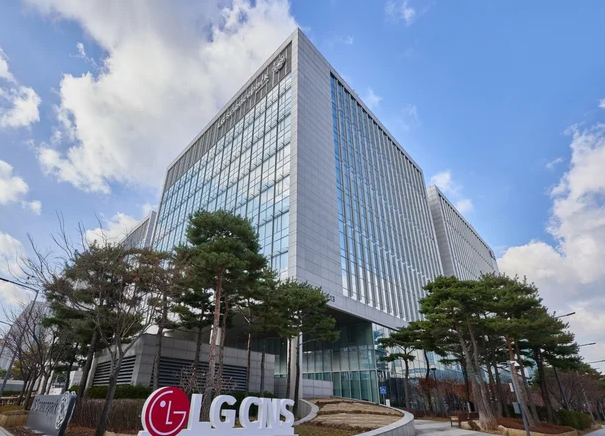 LG CNS, 오픈AI와 '리셀러 파트너' 계약…'기업용 챗GPT'로 B2B 공략 속도 [이코노믹데일리] LG CNS(대표 현신균)가 생성형 AI(인공지능)의 최강자 오픈AI(OpenAI)와 손잡고 국내 기업용 AI 전환(AX) 시장 공략에 속도를 낸다. 이는 지난해 9월 삼성SDS가 국내 첫 리셀러 파트너 계약을 체결한 데 이은 두 번째 대형 파트너십으로, 국내 IT 서비스 '빅2'가 '기업용 챗GPT' 시장을 두고 정면으로 맞붙게 됐음을 의미한다. 13일 LG CNS는 최근 오픈AI와 '리셀러 파트너(Reseller Partner)' 및 '엔터프라이즈 AI 서비스 구현 파트너' 계약을 동시 체결했다고 밝혔다. 이로써 오픈AI는 한국 시장에서 마이크로소프트(MS) 애저(Azure)라는 단일 창구에 의존하지 않고, 국내 IT 서비스 양강을 모두 파트너로 삼는 '투트랙(Two-track)' 전략을 본격화했다. 이번 협력의 핵심은 '챗GPT 엔터프라이즈'다. 이 서비스는 기업 내부 정보가 AI 모델 학습에 활용되거나 외부로 유출되는 것을 원천 차단하는 것이 가장 큰 특징이다. 그동안 보안 문제로 챗GPT 도입을 망설였던 기업들의 '페인 포인트(Pain point)'를 해결한 셈이다. 또한 기업의 사내 시스템 및 데이터와 직접 연동해 대용량 문서를 빠르게 분석하고 복잡한 업무 자료를 요약하는 등 고난도 작업 수행이 가능하다. 오픈AI의 '기업용 AI 현황' 보고서에 따르면, 챗GPT 엔터프라이즈의 대화량은 전년 대비 8배, 복잡한 문제 해결에 쓰이는 '추론' 토큰 소비는 320배나 급증하며 기업 시장에서의 효용성을 입증하고 있다. LG CNS는 이번 계약을 위해 전담 조직인 '오픈AI 론치 센터'를 신설했다. 이 조직은 AI 전문 엔지니어와 컨설턴트 등 정예 인력으로 구성되며, 오픈AI 본사 엔지니어들과 직접 협력한다. 고객사는 LG CNS를 통해 도입 컨설팅부터 시스템 구축, 기술 지원, 실전형 워크숍까지 '풀스택(Full-stack)' 서비스를 원스톱으로 제공받을 수 있다. 이는 단순한 솔루션 판매를 넘어, 각 기업의 특성에 맞는 'AI 전환 로드맵'을 설계해 주는 AX 전문 파트너로서의 역할을 강화하겠다는 의지다. ◆ MS와 '경쟁 속 협력'…맞춤형 AI 에이전트 시장 선점 업계에서는 LG CNS와 오픈AI의 결합이 국내 AX 시장의 경쟁을 한층 심화시킬 것으로 본다. 기존에는 MS 애저 클라우드를 통해서만 오픈AI 모델을 사용할 수 있었지만, 이제는 LG CNS라는 또 다른 '공식 창구'가 열렸기 때문이다. LG CNS는 향후 오픈AI의 API(응용프로그램 인터페이스)를 활용해 고객 맞춤형 'AI 에이전트' 개발에도 나설 계획이다. 이는 특정 업무나 산업에 특화된 AI 비서를 만들어 제공하는 고부가가치 사업으로, LG CNS가 보유한 금융, 제조, 공공 분야의 도메인 지식과 결합해 시너지를 낼 것으로 기대된다. 김태훈 LG CNS AI클라우드사업부장(부사장)은 "국내에서 가장 많은 고객 AX 성공 사례를 창출한 경험을 바탕으로 오픈AI와의 협력을 통해 기업용 AX 시장 주도권을 더욱 강화할 것"이라고 강조했다. 이번 파트너십은 오픈AI에게도 한국이라는 전략적 시장에서 MS 의존도를 낮추고 영업망을 다각화하는 효과를 가져다줄 전망이다. 2026년, LG CNS와 MS 간의 '경쟁 속 협력' 구도가 국내 엔터프라이즈 AI 시장의 성장을 어떻게 견인할지 귀추가 주목된다.
2026-02-18 11:54:50
-
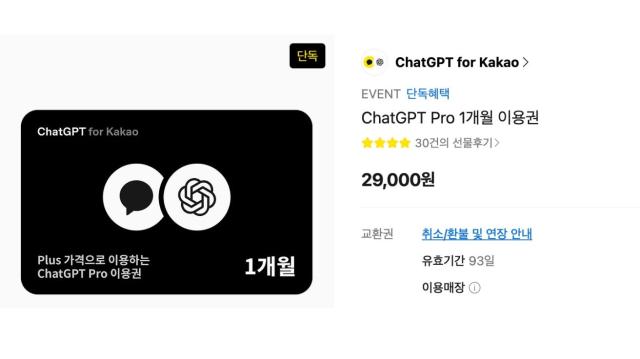 "30만원짜리를 2만9000원에"…정신아의 '1000만 AI 유저' 확보 전략 [이코노믹데일리] 카카오가 오픈AI의 최상위 인공지능(AI) 모델인 '챗GPT 프로' 이용권을 정가 대비 90% 할인된 가격에 내놓는 파격적인 프로모션을 단행했다. 이는 지난해 10월 출시한 '챗GPT 포 카카오(ChatGPT for Kakao)'의 이용자를 폭발적으로 늘려 AI 플랫폼으로서의 지배력을 확보하겠다는 정신아 카카오 대표의 강력한 의지가 반영된 것으로 풀이된다. 13일 플랫폼 업계에 따르면 카카오는 카카오톡 선물하기에서 챗GPT 프로 1개월 이용권을 2만9000원에 판매하는 단독 프로모션을 시작했다. 챗GPT 프로의 정가 월 이용료가 29만9000원(200달러) 수준임을 고려하면 사실상 10분의1 가격에 서비스를 푸는 셈이다. 1인당 최대 5개까지 구매 가능하며 판매 종료 시점은 미정이다. 이번 프로모션의 핵심은 압도적인 '가성비'를 통한 이용자 유입이다. 챗GPT 프로는 오픈AI의 최신 영상 생성 AI인 '소라2(Sora 2)'와 코딩 특화 모델 '코덱스(Codex)', 추론 능력이 강화된 'o1 프로' 모델 등을 제한 없이 사용할 수 있는 최상위 티어다. 이용자들 사이에서는 "프로 모델을 커피 몇 잔 값에 쓸 수 있다니 믿기지 않는다"는 반응이 쏟아지며 구매 인증이 이어지고 있다. 다만 카카오는 해당 이용권 등록을 '챗GPT 포 카카오' 계정을 통해서만 가능하도록 제한을 뒀다. 이는 저렴한 가격을 미끼로 사용자를 카카오의 AI 생태계 안으로 끌어들여 묶어두는 락인(Lock-in) 효과를 노린 전략이다. 등록 후에는 일반 챗GPT 앱에서도 동일한 프로 기능을 사용할 수 있어 사용자 편의성을 해치지 않으면서도 가입자 수를 늘리는 영리한 구조를 택했다. 이러한 공격적인 행보는 정신아 대표가 지난 12일 실적발표 콘퍼런스콜에서 밝힌 AI 전략과 궤를 같이한다. 정 대표는 "챗GPT 포 카카오 이용자 수가 출시 4개월 만에 200만명에서 800만명으로 급증했다"며 "연내 유의미한 이용자 기반을 확보하고 카카오 자체 에이전트인 '카카오툴즈'를 결합해 효용 가치를 높이겠다"고 강조했다. 업계에서는 카카오가 자체 거대언어모델(LLM) 개발 경쟁에서 한발 물러서는 대신, 글로벌 1위인 오픈AI와의 동맹을 강화해 'AI 서비스 포털'로서의 입지를 굳히려는 전략으로 분석한다. 네이버가 자체 모델 '하이퍼클로바X'를 중심으로 B2B와 검색 시장을 공략하는 것과 달리, 카카오는 국민 메신저 카카오톡의 접근성을 무기로 B2C AI 서비스의 대중화를 선점하겠다는 것이다. 카카오는 챗GPT 프로 외에도 월 2만9000원 상당의 '챗GPT 플러스' 1개월권을 구매하면 1개월을 더 주는 '1+1' 행사도 병행 중이다. 사실상 수익을 포기한 출혈 마케팅이지만 이를 통해 확보된 데이터와 트래픽은 향후 카카오의 자체 AI 에이전트 고도화에 필수적인 자양분이 될 전망이다. 전문가들은 카카오의 이번 전략이 단기적으로 이용자 확보에 큰 성공을 거둘 것으로 내다봤다. 다만 오픈AI에 대한 기술 종속도가 심화될 수 있다는 우려와 함께, 향후 프로모션 종료 후 정상 가격으로 복귀했을 때 이용자 이탈을 막을 수 있는 카카오만의 차별화된 서비스 개발이 시급하다는 지적도 나온다. 카카오 관계자는 "이번 프로모션은 더 많은 이용자가 최신 AI 기술을 경험하게 하고 이를 가족과 지인에게 선물하는 문화를 만들기 위한 것"이라며 "선물하기에서 처음 제공하는 단독 프로모션이며 기간 한정으로 진행되는 만큼 조기 소진될 가능성이 있다"고 전했다.
2026-02-13 10:35:10
-
 "오픈AI 넘어 구글까지" 정신아의 빅테크 우군 확보… AI 카톡 대중화 쏜다 [이코노믹데일리] 카카오가 인공지능(AI) 서비스 영토 확장을 위해 오픈AI에 이어 구글과 손을 잡았다. 국내 메신저 시장을 장악한 카카오톡의 플랫폼 파워와 구글의 안드로이드 생태계 및 차세대 하드웨어를 결합해 글로벌 수준의 AI 경험을 제공하겠다는 포석이다. 정신아 카카오(대표 정신아) 대표는 12일 열린 2025년 실적 발표 콘퍼런스콜에서 "이 자리에서 처음으로 카카오와 구글의 전략적 파트너십 체결 소식을 발표한다"며 "디바이스 측면에서 차세대 AI 경험을 선보이기 위해 글로벌 협업을 본격적으로 시작하기로 합의했다"고 밝혔다. 이번 파트너십의 최우선 과제는 카카오의 AI 브랜드 '카나나'의 범용성 확보다. 그동안 카카오톡 내에서 일정을 관리하고 상품을 추천해주는 '카나나 인 카카오톡'은 온디바이스 AI 기술 적용 문제로 아이폰(iOS) 일부 기기에서만 시범 운영되어 왔다. 카카오는 구글과의 협력을 통해 안드로이드 운영체제에 최적화된 카나나 서비스를 구축한다. 이를 통해 국내 스마트폰 시장의 70%이상을 차지하는 안드로이드 이용자들에게도 AI 서비스를 전면 개방할 예정이다. 정식 출시 시점에는 갤럭시 등 안드로이드 기반 스마트폰에서 카카오톡 AI 기능을 끊김 없이 사용할 수 있게 된다. ◆ 안드로이드 최적화로 '카나나' 날개 단다 양사의 협력은 모바일을 넘어 웨어러블 기기로 확장된다. 카카오는 구글이 개발 중인 차세대 'AI 글라스'에 최적화된 사용자 인터페이스(UI)와 사용자 경험(UX)을 공동 구축하기로 했다. 스마트폰을 꺼내지 않고도 안경을 통해 카카오톡 메시지를 확인하고 AI 비서와 소통하는 '핸즈프리(Hands-free)' AI 라이프스타일을 선점하겠다는 의지다. 이는 카카오가 단순히 소프트웨어에 머물지 않고 미래형 디바이스 경쟁에서 '필수 인터페이스'로 자리 잡겠다는 전략으로 풀이된다. 구글 입장에서도 한국 시장에서 압도적인 점유율을 가진 카카오톡을 자사 하드웨어의 핵심 킬러 콘텐츠로 확보하는 실리를 챙겼다. 인프라 측면에서의 협력도 구체화됐다. 카카오는 구글의 AI 특화 반도체인 텐서처리장치(TPU) 도입을 대폭 확대한다. 정 대표는 "구글 클라우드와 유의미한 규모의 TPU 클라우드를 운영하는 방안을 논의 중"이라고 설명했다. 엔비디아 GPU(그래픽처리장치) 수급난과 고비용 문제가 AI 업계의 화두인 상황에서 구글의 전용 칩인 TPU를 활용하는 것은 비용 절감과 연산 효율화라는 두 마리 토끼를 잡는 신의 한 수가 될 것으로 보인다. 카카오는 이를 통해 자체 LLM(거대언어모델) 고도화와 서비스 운영 비용 최적화를 동시에 달성한다는 계획이다. 업계에서는 카카오의 행보를 '실용주의 노선'으로 분석한다. 독자적인 모델 개발에만 매몰되지 않고 오픈AI와 구글 등 글로벌 리더들과의 연합군을 형성해 '가장 한국적인 AI 서비스'를 빠르게 출시하는 전략이다. IT 업계 관계자는 "카카오는 글로벌 빅테크들이 한국 시장에 진입할 때 가장 매력적인 파트너"라며 "구글과의 동맹은 카카오가 단순한 국내 메신저 기업을 넘어 글로벌 AI 기술이 사용자 일상으로 들어오는 통로(Gateway) 역할을 확고히 하는 계기가 될 것"이라고 전망했다. 카카오는 이번 협력을 바탕으로 연내 안드로이드 버전 카나나 정식 서비스를 론칭하고 구글과의 기술 교류를 통해 멀티모달 AI 기능을 대폭 강화할 방침이다.
2026-02-12 18:14:31
-
 이재용 회장, 밀라노 올림픽서 '스포츠 외교' 광폭 행보…美 부통령 등 글로벌 리더와 회동 [이코노믹데일리] 이재용 삼성전자 회장이 2026 밀라노 코르티나담페초 동계올림픽 현장을 찾아 글로벌 정·재계 유력 인사들과 잇달아 회동하며 광폭적인 '스포츠 외교'에 나섰다. 국내 기업 중 유일한 국제올림픽위원회(IOC) 최상위 후원사(TOP) 대표로서 한국 재계의 글로벌 위상을 재확인시켰다는 평가다. 6일(현지시간) 재계에 따르면 이 회장은 올림픽 개막을 하루 앞둔 지난 5일 IOC가 주최한 공식 갈라 디너 행사에 참석했다. 이 자리에는 커스티 코번트리 IOC 위원장을 비롯해 세르조 마타렐라 이탈리아 대통령, JD 밴스 미국 부통령, 마르코 루비오 미국 국무장관 등 세계 주요국 정상급 인사들이 대거 집결했다. 빌럼 알렉산더 네덜란드 국왕, 타밈 빈 하마드 알사니 카타르 국왕 등 왕실 인사들도 자리를 함께했다. 글로벌 재계 리더들과의 교류도 활발했다. 제임스 퀸시 코카콜라 회장, 브라이언 체스키 에어비앤비 CEO, 레이널드 애슐리만 오메가 CEO, 샤일리시 예유리카르 P&G CEO 등 글로벌 기업 경영진이 참석해 비즈니스 현안과 협력 방안을 논의하는 '물밑 외교'의 장이 펼쳐졌다. 재계 관계자는 "IOC 갈라 디너는 단순한 사교 행사를 넘어 글로벌 정치·경제 흐름이 교차하는 최상위 레벨의 네트워킹 무대"라며 "이 회장의 참석은 삼성전자의 브랜드 파워와 글로벌 네트워크 역량을 보여주는 상징적인 행보"라고 분석했다. 이 회장의 올림픽 현장 경영은 2024년 파리 하계올림픽 이후 2년 만이다. 당시에도 에마뉘엘 마크롱 프랑스 대통령 초청 오찬에 참석해 일론 머스크 테슬라 CEO 등과 회동하며 미래 기술 협력을 모색한 바 있다. 삼성전자는 이번 올림픽에서 모바일 기술을 통한 혁신적인 마케팅을 전개한다. 개막식 현장 촬영과 중계에 최신 플래그십 '갤럭시S25 울트라'를 투입해 생생한 현장감을 전 세계에 전달한다. 또한 자원봉사자와 선수단에게 제공된 갤럭시 단말기의 실시간 AI 통역 기능을 통해 언어 장벽 없는 대회 운영을 지원한다. 선수단 전원에게는 '갤럭시Z플립7 올림픽 에디션' 1만7000여대가 지급됐다. 삼성과 올림픽의 인연은 1988년 서울올림픽 지역 후원사로 시작해 1997년 IOC와 TOP 계약을 체결하며 30년 가까이 이어지고 있다. 고(故) 이건희 선대회장이 IOC 위원으로 활동하며 평창 동계올림픽 유치에 기여한 '스포츠 외교' 유산을 이재용 회장이 계승해 확장하고 있는 셈이다. 삼성전자의 브랜드 가치는 올림픽 후원 시작 직후인 2000년 52억달러(43위)에서 지난해 905억달러(약 129조원)를 돌파하며 글로벌 톱5 브랜드로 성장했다. 삼성전자는 밀라노 주요 랜드마크에서 옥외 광고를 진행하고 선수와 팬들이 교류하는 '삼성 하우스'를 운영하는 등 현지 마케팅을 강화하고 있다. 삼성전자의 올림픽 공식 후원 계약은 2028년 미국 LA 올림픽까지 이어진다.
2026-02-08 13:54:54
-
 최태원 차녀 최민정, 韓서 '인재 사냥' 나섰다…AI 헬스케어 독자 노선 가속 [이코노믹데일리] 최태원 SK그룹 회장의 차녀 최민정(35)씨가 이끄는 미국 헬스케어 스타트업 인티그럴 헬스(Integral Health, 대표 최민정)가 한국에서 인공지능(AI) 엔지니어 채용에 나섰다. 미국에서 창업한 지 약 2년 만에 한국 내 인력 확보에 나서면서 국내 지사 설립 및 R&D(연구개발) 거점 구축이 임박했다는 분석이 나온다. 6일 재계에 따르면 인티그럴 헬스는 최근 채용 공고를 통해 서울에서 근무할 'AI 제품 엔지니어' 모집을 시작했다. 주요 업무는 최신 거대언어모델(LLM)을 활용한 제품 개발과 UI/UX 설계 등으로 명시됐으며 근무 형태는 대면과 재택을 병행하는 하이브리드 방식이다. 최 대표는 채용 공고와 함께 "적임자를 추천하거나 채용에 도움을 준 이에게 '인생 최고의 스테이크'를 대접하겠다"는 파격적인 제안을 덧붙였다. 이는 인재 확보에 대한 강한 의지이자 기존 재벌가 자제들의 정형화된 경영 방식과는 차별화된 스타트업 CEO로서의 면모를 보여주는 대목이다. 2024년 미국 샌프란시스코에서 설립된 인티그럴 헬스는 심리 건강 전문 헬스케어 플랫폼이다. 핵심 경쟁력은 자체 개발한 AI 케어 코디네이션 에이전트 '나이팅게일(Nightingale)'이다. 환자의 의료 정보를 분석하고 심리 상담사나 의료 기관과 매칭하며 진료 이후의 행동 관리까지 돕는 솔루션이다. 업계에서는 최 대표가 한국 채용에 나선 배경을 두고 '기술 고도화'와 '비용 효율성'을 꼽는다. 미국 현지 개발자 인건비가 천정부지로 치솟은 상황에서 상대적으로 우수한 실력을 갖춘 한국의 AI 엔지니어를 영입해 기술 경쟁력을 강화하려는 포석이다. 또한 최근 본사 거점을 샌프란시스코에서 뉴욕 브루클린으로 옮긴 데 이어 서울에 R&D 거점을 마련함으로써 '24시간 개발 체제'를 구축하려는 의도로도 풀이된다. ◆ SK 그늘 벗어난 '홀로서기'…성공 여부 주목 최 대표의 행보는 재계의 이목을 집중시키고 있다. 언니 최윤정(37)씨가 SK바이오팜 전략본부장으로, 남동생 최인근(31)씨가 맥킨지앤드컴퍼니를 거쳐 경영 수업을 밟는 것과 달리 최 대표는 철저한 독자 노선을 걷고 있기 때문이다. 그는 과거 재벌가 여성 최초로 해군 장교로 자원입대해 아덴만 파병을 다녀왔고 전역 후에는 중국 투자회사와 SK하이닉스 등을 거치며 실무 경험을 쌓았다. 이후 SK그룹 계열사가 아닌 미국 스타트업 창업이라는 도전을 선택했다. 전문가들은 인티그럴 헬스의 국내 진출이 본격화될 경우 국내 디지털 헬스케어 시장에도 적지 않은 영향을 미칠 것으로 전망한다. 한국은 원격 의료 등에 대한 규제가 여전하지만 AI를 활용한 보조 솔루션 시장은 급성장하고 있다. 최 대표가 미국 시장에서 쌓은 노하우와 한국의 기술력을 결합해 규제 샌드박스 등을 통한 우회 진출을 모색하거나 글로벌 시장을 타깃으로 한 B2B(기업간거래) 모델을 확장할 가능성이 높다. 다만 SK그룹 차원에서의 지원 가능성은 낮게 점쳐진다. 최태원 회장이 자녀 교육에 대해 '방목형'을 강조해왔고 최 대표 역시 독립적인 경영 의지가 강하기 때문이다. 재계 관계자는 "최민정 대표의 행보는 오너 3·4세 경영의 새로운 모델을 제시하고 있다"며 "이번 한국 채용은 인티그럴 헬스가 단순한 스타트업을 넘어 글로벌 기업으로 도약하기 위한 기술적 토대를 다지는 과정"이라고 분석했다. 인티그럴 헬스는 향후 미국 내 파트너십을 헬스케어 기관에서 보험사로 확대하고 AI 기반의 행동 건강 관리 모델을 고도화해 유니콘 기업(기업가치 1조원 이상 비상장사) 도약에 속도를 낼 계획이다.
2026-02-06 11:33:43
많이 본 뉴스
영상
Youtube 바로가기
![[사설] 환율 안정에 안주할 때 아니다…외환 방어력 키울 골든 타임이다](https://image.ajunews.com/content/image/2026/07/13/20260713092838404021_518_323.jpg)